

Apple green, self-selection
The pantry of my childhood took a lot of work.
My father unscrewed the metal racks and hammered in custom wood shelves to better fit the strange angles of the walls. My mother, loving the psychology behind colors, painted it apple green. Something about green stimulates hunger, she told me. And what better place to feel hungry than a fully stocked pantry?
The pantry where I interned one summer required different work.
The director called the people coming into the food pantry “guests.” She explained that stigma attached to food pantries can impact our mindset toward ourselves and each other. It might even keep people from seeking help.
She used language as a tool to rewrite the narrative. She wanted the guests to feel like shoppers, not helpless or embarrassed. The guests were more than the financial challenges they faced.
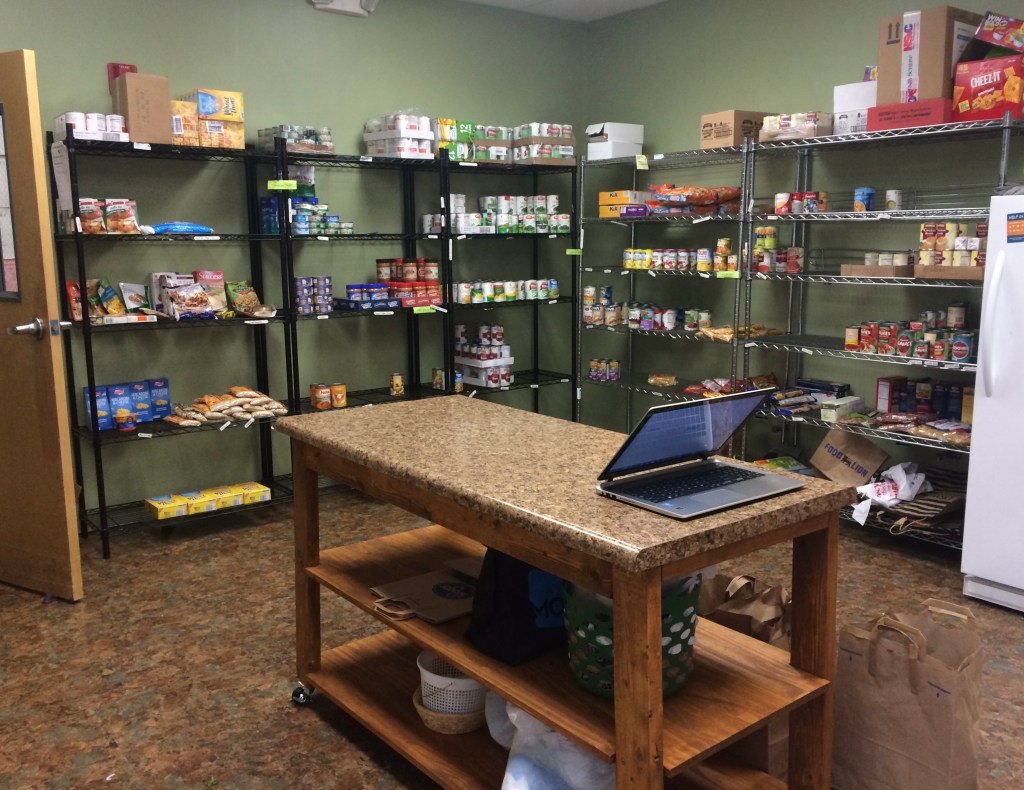
She structured the pantry as a mini-store. Guests walked through it to choose their cereal, produce, and meat. It cut down on waste and helped her know what to restock from the food bank.
Pantry, banks, kitchens.
These words described both spaces of abundance and scarcity: the privilege of my family’s stocked shelves in contrast to the financial hardships experienced in a church basement.
Spaces where connection and isolation can co-exist.
I started to wonder: How does the language around food access impact us?
Language, power, and identity
I don’t know who said it first, but there is power in naming things.
Language plays an integral role in understanding our world, our experiences, and who we are. Though scholars debate whether language creates our reality or our reality shapes language.
Either way, language, power, and identity all interact in ways that create tangible consequences.
Think about our food system. We’ve created networks and systems for our food by using language: “farms” produce and “grocery stores” sell.
We’ve also created a lot of problems using uncritical language. That is, language that holds layers of meaning or might be misunderstood, like “local” food.
Our general food knowledge in the U.S.? Not as great as we think. That’s creating issues.
And how do we start to fix problems if they’re undiagnosed? Or misdiagnosed?
As much as language awards power –like a title or honor—language also reveals power.
For instance, calling people “guests” instead of “beneficiaries” or “the needy,” shows that the pantry director wanted to challenge the power dynamics. Instead of labeling the person as their financial circumstances, the word “guests” emphasizes service and relationship.
I want to investigate food access language because it reveals who holds power in the systems we’ve created. For example, how do we talk about nutrition? Are these conversations leaving out people who can’t afford produce?
It also reveals our cultural values in the U.S., for better and worse. (We love a “quick and easy” recipe! What does this say about us, positively and negatively?
Finally, the language tells us how we identify ourselves and each other. Who is “hungry”?
Looking at how we talk about food can reveal problems we face and help us create solutions.
Who doesn’t have enough to eat today? Who’s doing what about it? And why haven’t we fixed it by now?
If we don’t ask these questions, our food system won’t change. Nutrition gaps and mindless consumption will continue, and certain people will continue profiting from injustices and ignorance.
The potential to change is wrapped up in every food, so I’m peeling back the layers.
Food access alphabet
This language is familiar to us, but let’s unpack the connotations and stories. We can unearth implicit bias and discover the blueprints to structures we need to replace.
The language of food access tells stories about what we eat and, ultimately, who we are. It shows us how we talk about personal health, community wellness, ethics, environmental justice, and more.
I imagine sitting together around a table, hungry for understanding, sharing different cultures, and all bringing a unique relationship with food.
I’ll spread the words out across our table and we’ll dig in together.
What better way to start a collection of language than with the alphabet?
So, pass the salt, and let’s shake up the system!
 sarahkoth.com
Important work! Funny, my husband worked at a food distribution this week & the guests on the whole were unfamiliar with black pepper. He didn’t know how to describe it… Language is essential.
LikeLike
How interesting, Siv! I find it tricky to describe the taste of black pepper, too. Food education is very important (and fun!). The more we can increase access to food, the more we can all experience the flavors – so glad to see this in your community!
LikeLike