
| 8 minute read |
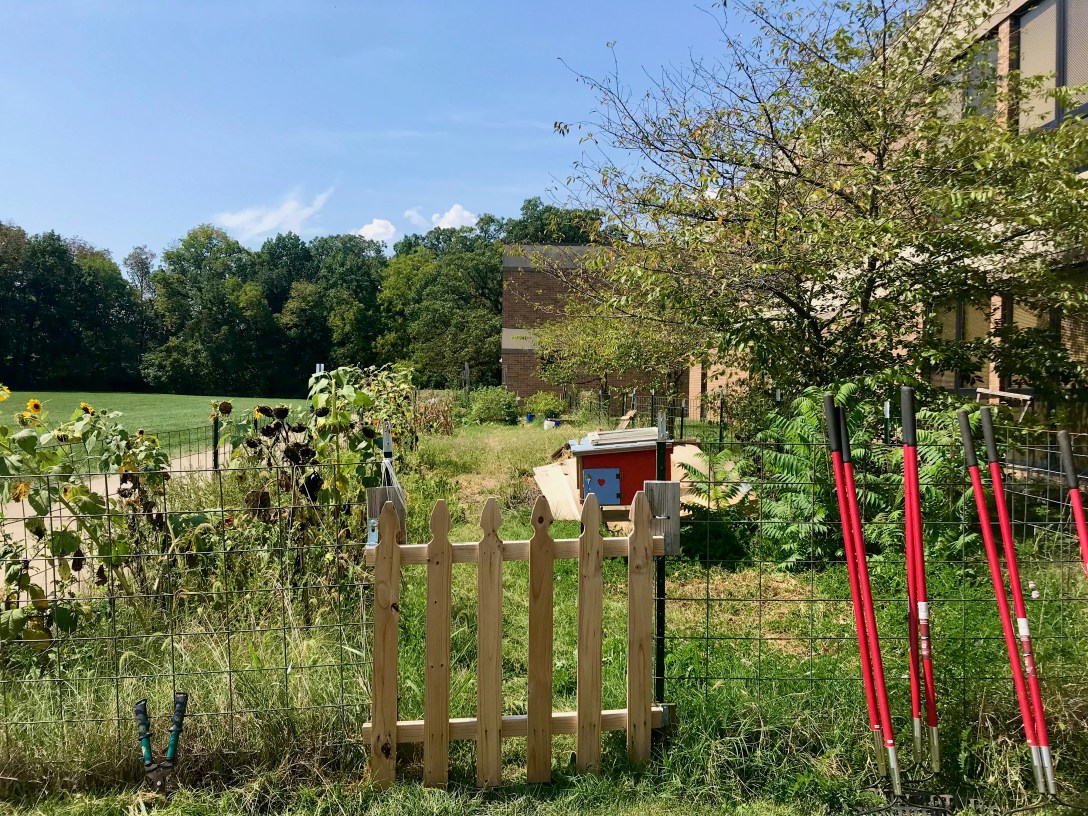
“This is where they keep the bunnies,” I said, pointing to the red hutch within the fence. I led the new volunteer along on the sidewalk beside the school’s garden. “And this is where we’ll take out the old flower bed today. Let’s go through the gate.”
I had worked alongside the students and staff for several weeks to revitalize their outdoor classroom, and we welcomed more volunteers.
“Hey! Who are you?”
We turned to see a student running toward us.
“You’re not supposed to be in there! That’s our garden!”
Apparently, he didn’t recognize me from the week before. Or he did, but I was still an outsider. I didn’t have garden clearance.
“Hi! I’m showing her around your garden,” I said. “She’s a new volunteer.”
“Strangers!” he yelled. “Strangers in the garden!”
Access denied! Access denied! I heard.
The two of us stepped out of the gate as a teacher came over. She assured the student we weren’t a threat and the alarm stopped.
Whether for safety reasons or as an outsider to his community, I didn’t have the student’s approved access to the garden.
I didn’t have “the ability, right, or permission to approach, enter…or use” the space, as Dictionary.com defines “access.”
So, what happens when we attach “food” to “access”? Who’s giving the ability, the right, or permission to get food?
Unwrapping complexities
Food access describes the physical ability to buy affordable, culturally appropriate, quality food.
At times, food access seems like a question of who has VIP access.
If we have enough money, we can buy a ticket to the whole foods, organic, locally grown isles of the grocery store.
If we know the right people, we can connect to the producers who grow our ingredients.
If we have enough space, time, and resources, we can even grow our own food.
The basic label: “food access” is the ability to get food.
Unwrapped: it’s our ability to get food within a web of social, political, geographic, and socioeconomic factors.
We already know the importance of putting food on our plates We also know a few challenges in the recent years that have made it difficult.
In 2020 during the COVID-19 pandemic, nearly 1 in 4 U.S. households lacked consistent access to food. Supply shortages, distribution issues, and financial struggles exacerbated an already-inequitable food system, disproportionately impacting Black and Hispanic communities.
When we talk about “food access,” we might think of people driving through distribution lines or going to pantries or kitchens.
People typically imagine “others” who are in vulnerable populations, financially underprivileged, and historically disadvantaged. We tend to focus on why a person doesn’t have access to food.
And that’s an important question.
But it places the responsibility solely on one individual instead of looking at the complexities of our food system. It creates distance between us and “others” who lack of food access.
We’re more connected than we think. Getting food to everybody will have positive impacts on everybody.
So instead of questioning an individual, we need to ask questions that get to the root of the weeds:
Who grants access and what barriers do they face? How can we think more creatively about food access?
Ultimately, how can we increase accessibility?
Who and what gives us access?
Let’s start at the beginning.
We need producers, of course. Producing enough food isn’t the problem: we grow enough to feed every individual on the planet.
Instead, producers face issues of efficient harvesting and transportation. This creates a loss of income, wasted resources, and contributes to toxic carbon emissions. Producers impact the health of our earth and, ultimately, our food quality.
Let’s remember the challenges that producers face and consider how we can support them.
Once the producers have grown our food, we need our transporters. How is food being distributed between communities? How can we make transportation more efficient and effective?
From public transportation to road maintenance for refrigerated trucks, transportation impacts our plates. Some communities take a creative approach, like providing a mobile market for seniors who need a ride to the store.
That leads us to distributors. Grocery stores, supermarkets, convenience stores, and farmers markets all create spaces to purchase our food. Different communities tend to shop at different kinds of stores. Keeping this in mind, we can create more sustainable access.
Living wage jobs also increases our ability to purchase food. When people talk about “looking at the big picture” and “changing the system,” many conversations come back to simply needing more money to buy necessities.
We might not think of our local council members. But local government has major influence on the food access in our communities. There may be a Food Policy Council in your area. This is one of many ways to work with elected officials.
Social benefits programs increase food access, too. The Supplemental Nutrition Assistance Program (SNAP), Women, Infants & Children (WIC), National School Lunch Program, and Produce Prescription Programs (PPP) all help people purchase food –though the quality of it depends on the nearby store.
By creating more efficient, cost-effective ways to sign up for these benefits, we can support a more equitable food system (see the proposed HOPE Act of 2021).
Regional networks and organizations focused on food provide temporary and long-term access. There may be more in your community than you expect! Think of urban farms, community fridge networks and Food Assistance Hotlines.
While they aren’t often highlighted in these conversations, restaurants influence how we get food. As they create their menus, prices, and find a location, they can invest in local foodways by sourcing their ingredients from nearby producers. Restaurants can also help us learn more about different cultures and provide experiential food education.
Though food education is important, we must first have access to food.
How can we increase access?
We must consider the complexities of food access. We need to address the lack of food access alongside racial injustice, economic injustice, housing crisis, and environmental injustice.
I don’t hold hard feelings toward the students who kicked me out of the garden.
In fact, I recognize that I was a white woman outsider coming into his beloved space without a trusted community gatekeeper –even more, with a new person!
The moment felt like an analogy to the big, expensive health food stores that try to come into the space to increase access but aren’t as trusted (or affordable) or culturally aware as other options.
We can’t just convince corporations to move into our neighborhoods. We must learn what works best for and within the community.
It’s not a controversial idea: Food for all. But it is controversial in how we get food to all.
Where do we start?
Listen and engage with people who are experiencing these issues. Highlight their work, amplifying their ideas and voices. Look for people organizing and addressing multiple issues in their work.
Recognize the barriers in your community and, if you can, remove them. If you can’t, help organize.
People not experiencing hunger can and should contribute to sustainable solutions.
We must listen to understand, ask questions, and reflect on our assumptions about each other and about the way we’ve set up our foodways.
Investigating the layers of Food Access Language is a piece of this reflection process.
There are powerful gatekeepers in our food system. Our “system” is not some mysterious Matrix machine, though.
People have designed it. And people can redesign it.
| The Food Access Language series investigates words we use to talk about our food and how they impact our ability to put it on our tables. Unpacking this language reveals how we’ve built our foodways, which helps guide our steps to making food more accessible to all. |
 sarahkoth.com