
We learn how to adapt to our surroundings, but there are some beings who embrace change with delight. Even to the point where they create space for others to grow.
Plants that grow in a certain area without human intervention are known as native plants. These plants form interdependent relationships with their environment. They encourage biodiversity in plants and animals, manage water, and establish deep roots that nourish the soil. Because they coevolve with their surroundings, they don’t require a lot of maintenance.
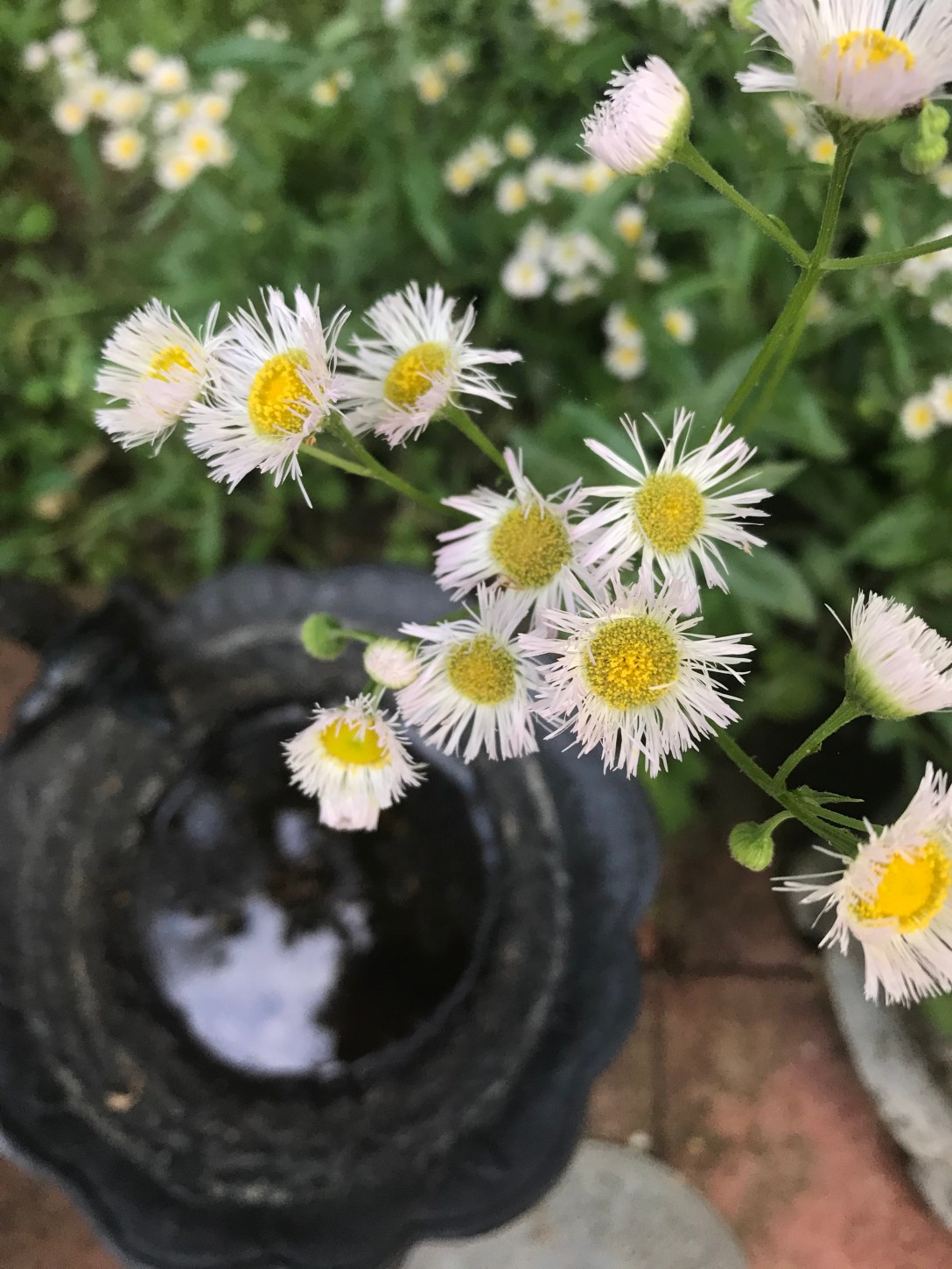
In fact, they might appear as a surprise. Eastern daisy fleabane sprouted all around my grandmother’s yard in Virginia this spring. She saw its beautiful white fringe around a sunny yellow making its way around her patio and decided to let it stay. Even in the clay soil, the wild herb plant flourishes. It provides food for insects and pollinators, leading to a buffet for the birds living in the surrounding forest.
Species vary across regions but encouraging native plants to grow anywhere helps support pollinators, wildlife, and ecological health. They remind us how interconnected we are with the environment.
Learning about native plants reminds me of people who adapt and thrive in their circumstances and encourage others to do so, too. Some may call them “a natural leader,” but our human-centric idea of leadership might miss the emphasis on interwoven relationships. Instead, the term “natural adapter” comes to mind. When I see these natural adapters, I’m thrilled to watch them bloom and activate others.
I witnessed the budding of a natural adapter during a time I had trouble doing so –and it was magnificent.
Connections cannot be forced
In the fall of 2019, I worked as an intern at a small ecological nonprofit. Their headquarters, a two-story house, resided on the corner next to a stoplight intersection, inconspicuous between the low-income neighborhoods and the edge of downtown where university students spent most of their time in coffee shops. They called the space around the house the “Sustainable Living Center.” There they hosted community events, school field trips, and environmental education workshops.
I had the opportunity to help host a middle school field trip. My mentor said I could create any kind of station I’d like, as long as it connected to the theme of the day: Stand Up For the Earth.
I excitedly designed a food art station. We’d use traditional art supplies and the juices from the garden fruit to draw different foods that come directly from the earth. We’d talk about the connections between our meals, our food system, cultural tastes, and agricultural practices. I’d split them into small groups and give them prompts to draw. Literally drawing connections! I thought. We’d chat about these ideas as we colored on a long sheet of paper on the front porch, looking out over the small garden in the front yard and considering the earth’s valuable nourishment.
Guess how long that lasted.
I also hadn’t realized that most of the fruit from this garden had clear juice, which clearly dampened the paper and my hopes for student engagement.
Seven minutes into a thirty-minute station, I saw closed markers lay across doodles unrelated to food or the environment. I felt as though I had disappointed them and had failed as a leader.
You shared some thoughts, I told myself. I’d bet they could use a break. It’s hard to be in middle school. Let them enjoy nature and the outdoors a bit, uninterrupted. Lead by giving them space.
The two small groups on the porch drifted into their own worlds. But one student still stood at the table I had set up with a long sheet of paper.
“Can I rip some of this off?” he asked.
“Sure,” I said. “Do you want some markers?”
He collected a few and said he was going to make a sign.
Is he making a sign for his room? I wondered. Maybe he’ll be drawn to environmental care in his career.
I walked around to encourage the groups to rest or draw, then chatted with the chaperone. I felt guilty, as though I wasted their time with my simplistic ideas. Maybe they need someone who will give them space to think, I realized. Some are probably bored, but maybe some appreciate it. They aren’t giving me feedback.
I decided the station was an open invitation to draw connections or to enjoy time outside. It reminded me that leadership isn’t forcefulness. It involves adapting to failed plans and others’ needs –much like how native plants coevolve and serve the critters around them.
Make space for the natural adapters
Several minutes later, the poster maker returned to show his creation: an image of our green and blue planet with the words “Stand up for the Earth.”
“Can I go stand on the sidewalk?” he asked.
I looked at the chaperone beside us.
“I’ll go with him,” she said.
I could see them from the porch, so I nodded. They walked up the driveway and stood twenty-five yards away. The poster maker held up his sign to show the drivers and waved.
Most drivers waved back.
“Hey, miss, can we get some paper too?” another student asked. Behind him, the group of students started to pick up markers.
“Yes, just remember if you’re making a sign to share, relate it back to the theme of the day,” I said.
“Honk for planet Earth,” “There is no planet B,” and “Be kind to the planet” soon covered the papers along with images of flowers and trees. Several poster makers joined the student on the sidewalk. They jumped up and down, cheering and waving to drivers, who honked and waved back.
The poster maker who had started this sidewalk activism dared to adapt.
Growing differently, together
Twenty minutes later, I guided the group toward the backyard for the close of the field trip. I paused next to the student on the porch. He folded his poster carefully to put it in his backpack.
“That was really awesome,” I told him.
“I want to keep doing this,” he said, smiling and glancing up from his poster to the now distant sidewalk. “I want to lead and start something. I think I’m good at this.”
Some people are natural adapters, natural sparks that lead to life-giving fires. Some people thrive in uncertain times. When plans don’t work, they start something new. When challenges come in waves, they figure out a way to surf. Even without a lot of maintenance, they continue to move toward the light.
I admire this ability. Through the global pandemic, many of us have practiced adaptability and flexibility even more than we realize. We likely practice these skills differently. Still, our growth impacts others in our lives whether we know it or not.
The sidewalk activist taught me similar lessons to native plants: adapt and invite others to do so, too.
When our days don’t go as planned –or if our plans are a bit flimsy to start with— remaining open to change can spur new growth. We might see new seedlings sprout before our very eyes.
 sarahkoth.com