
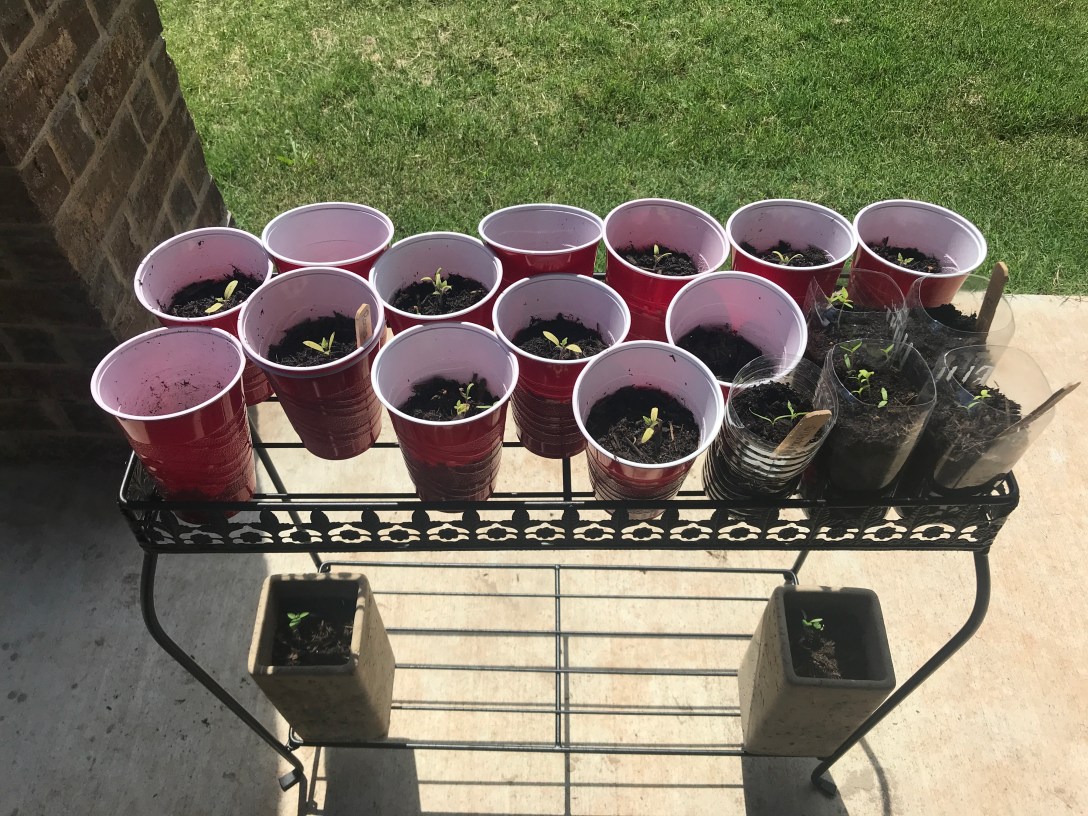
Patience is more than watching the physical seeds burst with new roots and emerge slowly. It’s also patience with our own growth. Especially if that growth seems stagnant or withered.
Prepared for impatience
Like for so many people, 2020 held a lot of personal grief. I thought it would be the year when endings quickly transitioned into beginnings. So, I made lots of plans and backup plans, all of which went into the world’s collective dumpster fire. And some endings ended up being really, truly, the end.
As I finished graduate school, I moved in with my parents, who had moved across the country a few years earlier. I hadn’t wanted to live in an unfamiliar, densely populated city without forests and mountains nearby. From my youngest years to young adulthood, I had the privilege of space to think and play in the rural suburbs. A gift I appreciate on a much deeper level now.
My generous parents assured me that their patio had space for a few containers. They knew I wanted to garden and made the space for me to do so. I just had to step up and do it.
I’ll plant some easy things for my parents to maintain or take them with me when I leave, I thought, thinking I readily adapted to the pandemic plot twist.
I unloaded my boxes but left the tape on many of them. I’ll move as soon as I get a job, so I’ll just leave them ready to go.
A month passed. Then a few more.
I opened a few boxes and added some college-years décor to my childhood furniture. In one of the boxes, I found a close friend’s gift: a grow-your-own salsa garden kit.
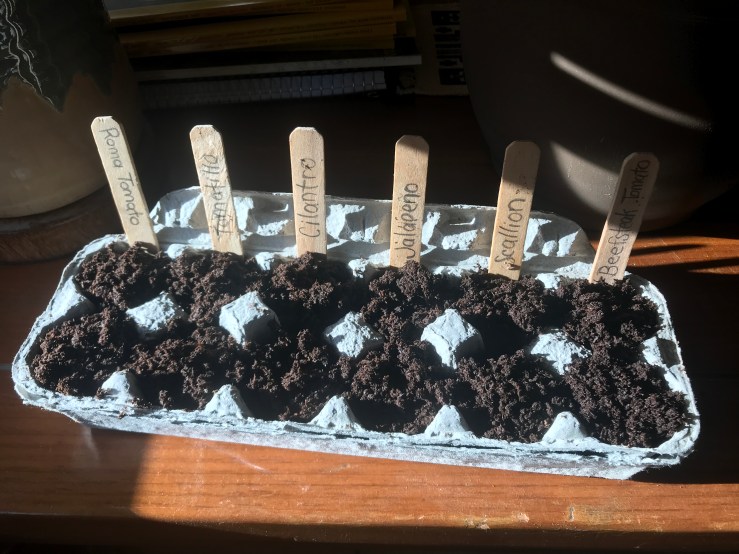
I had saved the cardboard egg carton for years, thinking when I settled into a more permanent place, then I’d plant a container garden. It would mark the start of a new season of life –but it seemed my life had gone dormant.
Wanting to see some movement somewhere, it seemed like a decent time to try growing a few tomatoes and peppers. How hard could it be?
I sat at the kitchen counter, dabbing the kit’s soil cubes with water to revive it as my parents talked about my grandfather’s rapidly decreasing health.
I placed the carton in the sunniest window and sat next to it as I waited for friends scattered around the country to text me back.
I folded the leggy seedlings into fresh potting soil and moved them onto the patio as dozens of job rejections clouded my next step.
Hope and grief often coexist
Still, moments of joy sprinkled throughout these months. I was privileged to have a safe, welcoming place to spend time with a supportive family. We watched baking shows, made new desserts, and discovered park trails. We laughed often and talked about what we were learning. Omitting these moments distorts the whole picture.
Gardens show this idea, too. In the seemingly agonizing waiting, what a joy to see bits of green emerging. Even recognizing the soil’s nutrients, how the decomposed offers nourishment and hope. What incredible determination that living beings have to survive.
Gardens are spaces in which life and death intertwine; they show us how to welcome both joy and grief. Even in a cardboard egg carton garden kit.
Learn with kind soul-talk
Practicing patience involves learning how to speak kindly to the soul. This garden showed me how I lacked patience with myself.
I waited too long to transplant the seedlings. I had forced them to stretch too far toward the light.
How could you just sit there?
I wanted to protect them from pests, so I made a concoction of soap and vinegar and spritzed their delicate leaves –which hadn’t attracted pests yet.
Why didn’t you do more research before you started? How stupid are you?
I added fertilizer in the plastic cups, thinking it would start them off strong. It shocked them. And, somehow, slugs had found their way into the bag and chomped on the thread-thin roots.
You couldn’t even save one? How could you mess everything up so badly?
Somehow my pandemic project had become a metaphor for my life stage –and brought out the coinciding insecurities. I wanted to do something meaningful and life-giving, but I went too hard, too fast, and my plans lacked flexibility.
We can’t control our seasons of growth
When I realized my actions harmed the plants, I stopped everything. I had visions of a career that supported community spaces and food forests, but when my first attempt to grow a tomato became such a huge failure, I felt like an exposed fraud.
So I went silent. I listened, read, noted, and watched YouTube videos of gardeners who may or may not have laughed at my plastic cup garden. I stopped sharing pictures of the progress with friends and family who shared my excitement. I didn’t want to waste anyone’s time or burden anyone with the loss I felt over the tiny little garden.
This was my idea of being “patient:” Sitting quietly in embarrassment, waiting for another season when I could get it together and do it right.
It took me months to realize I hadn’t learned the lessons that gardens offer. I needed to understand more than correctly timing the transplants and spritzing.
Gardens teach patience but not inactivity. They teach participation. Try again, make a mistake, learn a new practice. Take notes, measure effective practices, take a deep breath. Try again.
Gardens reiterate what many activists and advocates teach: we cannot expect ourselves to know everything nor do good perfectly every time we try. That way lies exhaustion, judgment, and burnout.
My carton of lessons came at a time when I wanted a carton of answers. While a failed garden followed the themes of 2020, so did the challenge of recognizing how patience and participation are interconnected. May we take on this challenge, even with its growing pains, giving grace to ourselves and each other.
 sarahkoth.com