
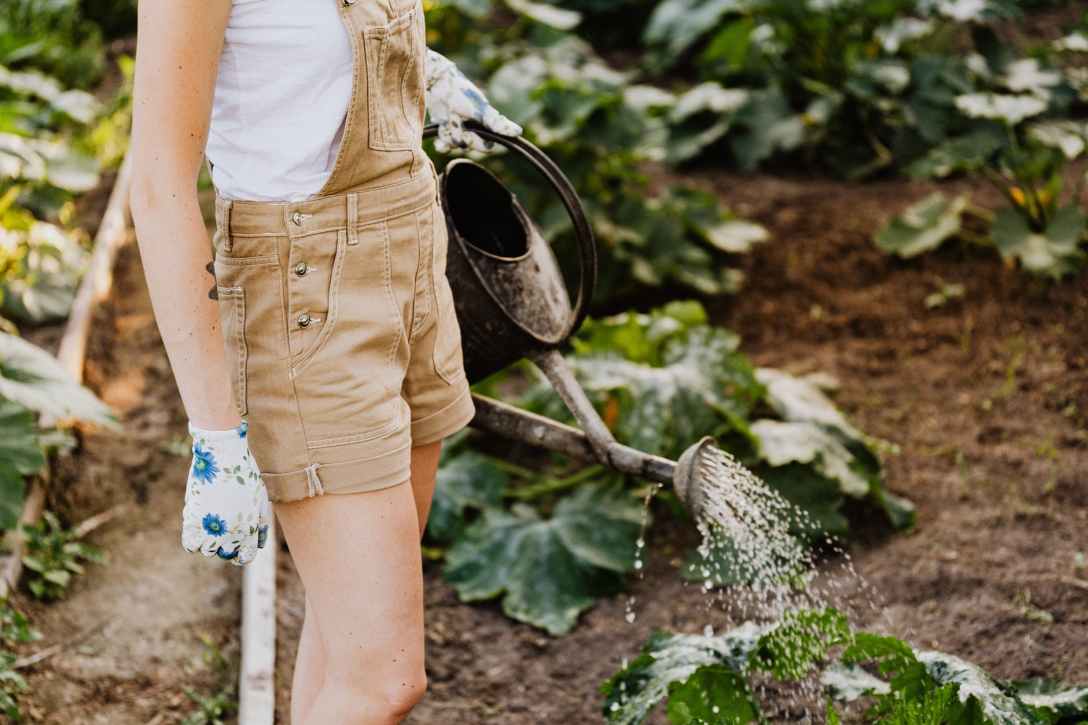
When leaves wilt, the research begins.
Wilting leaves on a plant signal distress because of something harmful in the environment. But not every plant needs the same nutrients for revival.
Typically, the leaves indicate when the roots need water. But it also might be a sign of too much heat, and the plant may need shade. Or maybe pests munched on the leaves, and they need a spritz of protection. Or it might mean the soil needs some nutrition, and a little fertilizer or compost would help refresh it.
I’m still a beginner in plant care, and their language takes time to learn.
I used to think any sign of distress meant dehydration. Growing up, the question “Are you drinking enough water?” was a universal response to any problem. It was asked with love, but it wasn’t a cure-all. With this “love,” I drenched several plants no longer with us.
There are times when water isn’t the thing that is needed, even if it’s the easiest thing to give.
We can research what the plant needs, but caretaking still requires trial and error. Once we add a little nutrient, take away a little sunlight, we continue listening and learning.
Like plants, humans need support in different ways. It reminds me of what author Gary Chapman calls the Five Love Languages: words of encouragement, quality time, acts of service, physical affection, and gifts.
While we need all five to some extent, we tend to feel especially loved when someone speaks a particular one. A friend sends a text before a job interview, spending time with family during a snow day, a random hug when passing in the kitchen.
Receiving the nutrients that we need helps us grow.
When we recognize how we receive and give love, then we can better express our needs. We can also recognize how others might receive and give love, too, even if the relationship isn’t necessarily close.
When we consider what nutrients are needed, we can find ways –big and small— to help revitalize the leaves.
I stepped into school gardens without knowing the difference between the weeds and mint in the raised beds. Still, the staff and students welcomed my enthusiasm and forgave me when I dug up the wrong plant.
The fenced-in garden sat beside the building, and the director had a vision for an outdoor classroom space. The school emphasized hands-on experience and mental wellness to students, both of which the garden encouraged. It just needed some revitalization, a sturdy weed hacker, and a grad school intern with some energy.
I showed up ready to learn alongside the students. Instead, they called me “the garden lady,” and I led several middle schoolers in their one-hour garden elective.
I tried to roll along with the wheelbarrow and focus on connecting with the students. As we collected empty chip bags and broken pencils, I asked them what they grew the year before and what they’d like to see.
They found the crickets in the tall weeds more interesting.
One afternoon, though, a slightly wilted heart seemed to reach out.
The student and I took on the plastic grid surrounding the wire mesh fence. We spoke as she held the zip ties so I could cut them, and then she took a turn with the clippers. She told me snippets of a crummy day, and it seemed something had shaken her confidence.
“I can’t do it,” she grumbled at the clippers. Other conversations around us vied for her attention, and I wasn’t sure what she needed.
Normally I’d have a gentle cheer for someone who’d had a tough day. Or I’d volunteer to do the task, speaking compassion through acts of service. Along with drinking more water, these were my go-to answers for someone with a problem.
But it was hot, and I was not ready to take back the clippers.
“Yes, you can,” I refused her defeat. “You can do it; I believe in you. C’mon, you can do it, do it, do it!”
Sure enough, the zip tie gave a snap!
“I did it.” Her smile showed relief, and we high-fived before moving to the next tie.
She didn’t need the water but rather to dig up the lie that she wasn’t strong enough. She needed to see her strength rather than to hear she could do it.
Building connections proved challenging with only a few hours per week. Without constant tending and communication, I wondered if I offered anything of substance to the students.
But I didn’t need to be the full bag of nutrients. I just needed to be a scattered shower.
Showing compassion doesn’t always require deep conversations or a thorough soak. It may mean asking what’s unhealthy in our environment, what lies we can help dig up, what to toss in the woods or the compost pile, and offer a little sprinkle of water.
Even if we’re not yet sure what nutrients are needed, we can reach out and share what we think will help. If we’re wrong, we can adapt.
Love in action means learning in a way that leads to growth.
 sarahkoth.com